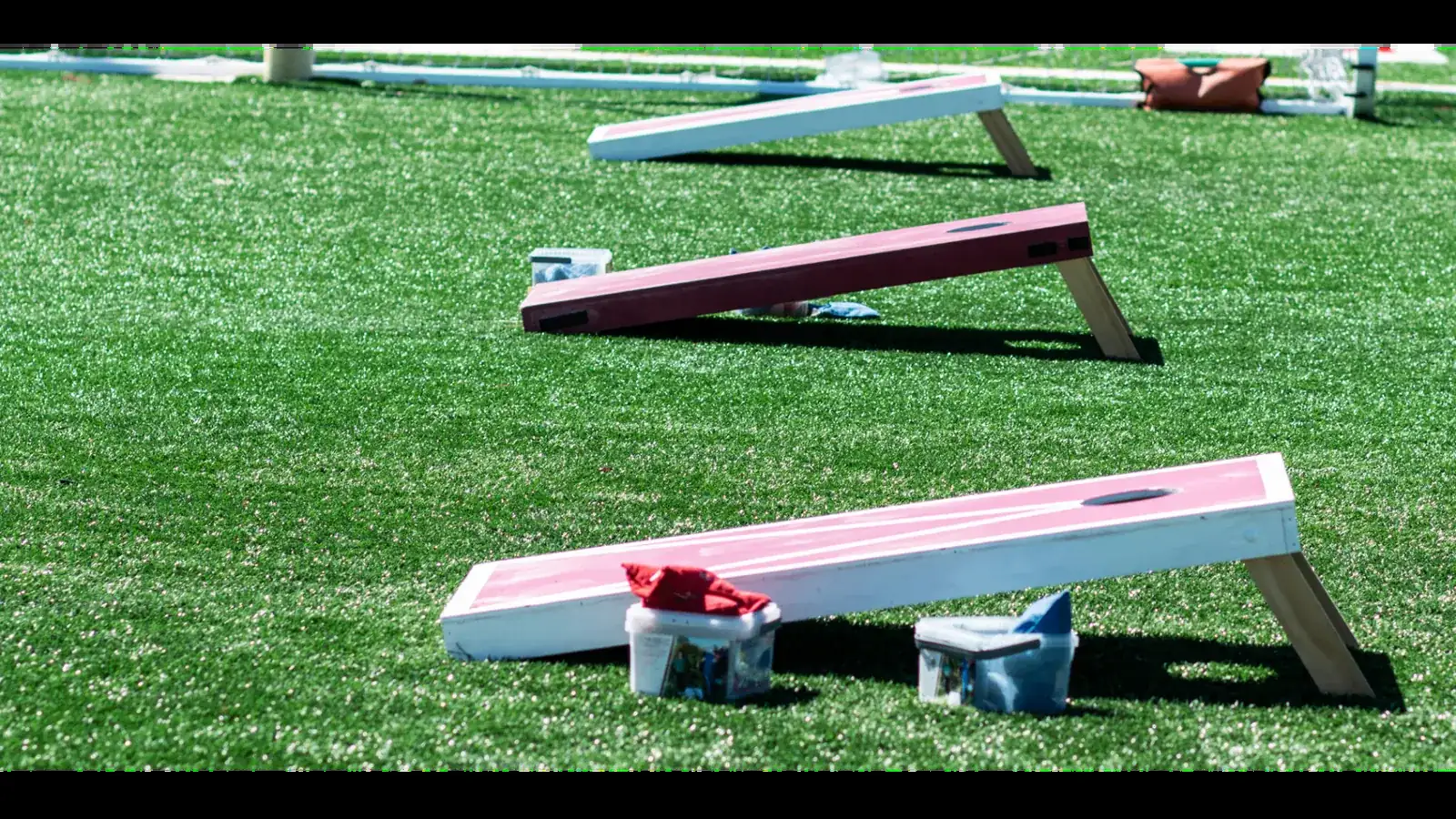
How to Start a Cornhole League in Your Retirement Community
Cornhole has quietly become one of the most popular activities in retirement communities across the country. It's easy to see why: simple rules, minimal equipment, and the perfect pace for socializing between tosses. A well-run cornhole league gives residents something to look forward to each week-a mix of friendly competition and community connection that keeps people coming back season after season.
If you're thinking about starting a cornhole league in your 55+ community, you're in the right place. This guide covers everything from basic setup to season-long management.
Why Cornhole Works for Retirement Communities
Cornhole isn't just a tailgate game. It has real advantages that make it ideal for senior players.
Low physical impact. No running, jumping, or quick movements. Players stand, toss, and walk to retrieve bags. Residents with mobility limitations, joint replacements, or balance concerns can participate comfortably.
Easy to learn, hard to master. The basic rules take two minutes to explain. But experienced players develop technique, spin, and strategy that keep the game interesting for years.
Naturally social. Games move at a conversational pace. Between tosses, players chat. Partners strategize. Spectators heckle (gently). The rhythm of cornhole invites connection in a way faster sports don't.
Adaptable to any skill level. A first-time player can compete against a seasoned tosser and still have fun-and occasionally win. The element of chance keeps games unpredictable.
Weather flexible. Cornhole can be played outdoors on grass, pavement, or covered patios. Many communities also set up indoor boards in rec rooms or community centers for year-round play.
Affordable equipment. Two boards and eight bags. That's all you need. Unlike sports requiring nets, goals, or specialized surfaces, cornhole has minimal startup costs.
Basic Cornhole Rules (Quick Reference)
For residents who haven't played, here's the simple version:
Setup
- Two boards placed 27 feet apart (front to front)
- Four bags per team (different colors for each team)
- Two or four players (singles or doubles)
Gameplay
- Teams alternate throwing bags toward the opposite board
- In doubles, partners stand at opposite boards
- Each round (all 8 bags thrown) is called a "frame"
Scoring
| Result | Points |
|---|---|
| Bag goes through the hole | 3 points |
| Bag lands and stays on the board | 1 point |
| Bag falls off or touches the ground | 0 points |
Cancellation scoring: Only one team scores per frame. Subtract the lower score from the higher score-the difference goes to the team with more points that frame.
Example: Team A scores 5 points (one in the hole + two on the board). Team B scores 2 points (two on the board). Team A gets 3 points for that frame (5 - 2 = 3).
Winning
First team to reach exactly 21 points wins. Some leagues play to 15 for shorter games.
Common Variations for Rec Play
| Standard Rule | Senior-Friendly Modification |
|---|---|
| 27-foot distance | Shorter distance (21-24 feet) for comfort |
| Must reach exactly 21 | "First to 21 or higher" to speed games |
| Stand behind front of board | Flexible foot position for balance |
| Standing only | Allow seated players if needed |
Adjust rules to fit your community's needs. The goal is participation, not strict competition.
Choosing a League Format
Doubles (2v2) - Most Popular
Two players per team, partners on opposite ends. This is the standard format because:
- Teams are easy to form (just need one partner)
- Built-in social pairing
- Strategy involves teamwork
- Games stay competitive
Singles (1v1)
One player per side, alternating throws. Works well for:
- Smaller groups
- Competitive/ladder leagues
- Players who want more throws per game
Rotating Partners (Mixer)
Different partner each week. Everyone plays with everyone over the season. Best for:
- Building community connections
- New residents meeting people
- Keeping things casual and social
Blind Draw
Partners assigned randomly at the start of each session. Keeps pairings fresh and unpredictable.
Structuring Your Season
Season Length
| Duration | Best For |
|---|---|
| 6 weeks | Testing interest, first-time league |
| 8 weeks | Standard rec league |
| 10-12 weeks | Established leagues with playoffs |
Start shorter. You can always extend if residents want more.
How Often to Play
Once per week is the sweet spot for most retirement communities. It's frequent enough to build momentum but doesn't overwhelm calendars.
Suggested days: Tuesday, Wednesday, or Thursday work well-avoiding weekend activities and Monday transitions.
Round Robin Schedule
Every team plays every other team. This is the fairest format.
| Number of Teams | Weeks Needed |
|---|---|
| 4 teams | 3 weeks |
| 6 teams | 5 weeks |
| 8 teams | 7 weeks |
| 10 teams | 9 weeks |
Add 1-2 weeks for playoffs if desired.
Playoffs
Even casual leagues benefit from a playoff to close the season:
- Top 4 teams: Semifinals + Championship
- Top 2 teams: Single championship match
- Everyone makes playoffs: Seeded bracket by standings
A championship game gives the whole community something to watch and celebrate.
Scheduling Tips
Best Time Slots
Morning (9-11 AM):
- Cooler temperatures (important for outdoor play)
- After breakfast, before lunch
- Good energy levels
Late Afternoon (4-6 PM):
- Cooler than midday
- Before dinner
- Nice "happy hour" social vibe
Avoid:
- Midday heat (outdoor leagues)
- Meal times
- Medical appointment windows (early morning)
Game Duration
A typical game to 21 points takes 15-25 minutes. Schedule 30-minute slots to allow for:
- Setup and warmup tosses
- Close games that run long
- Social time between matches
Sample League Night
5:00 PM - Court 1: Team A vs Team B
5:00 PM - Court 2: Team C vs Team D
5:30 PM - Court 1: Team E vs Team F
5:30 PM - Court 2: Team A vs Team C
6:00 PM - Court 1: Team B vs Team D
6:00 PM - Court 2: Team E vs Team A
With two board setups, you can move through matches efficiently.
Equipment and Setup
What You Need
Boards (2):
- Regulation size: 24" x 48"
- Hole diameter: 6 inches
- Front height: 3-4 inches
- Back height: 12 inches
Bags (8):
- 4 bags per team, two different colors
- Regulation: 6" x 6", filled with corn or plastic pellets
- Weight: approximately 1 pound each
Optional but helpful:
- Scoring tower or flip scoreboard
- Measuring tape for setup
- Shade canopy for outdoor play
- Chairs for spectators and waiting players
Board Placement
Outdoor:
- Grass, packed dirt, or paved surface
- Flat area with room behind each board for throwers
- Consider sun position-avoid direct sun in players' eyes
Indoor:
- Rec room, community center, covered patio
- Requires about 40 feet of length (27 feet between boards + throwing space)
- Ceiling height clearance for bag arc
Equipment Storage
Store boards flat or leaning against a wall in a dry location. Keep bags in a container to prevent moisture damage.
Registration and Teams
How Many Players?
For a doubles league, you need at minimum 8 players (4 teams). A comfortable size is 12-20 players (6-10 teams).
Registration Methods
Paper sign-up: Post a sheet in the clubhouse or rec center. Simple and accessible to everyone.
Online registration: Use a form or league management software. Easier for tracking but may exclude some residents.
Hybrid approach: Offer both. Enter paper registrations into the system manually.
Forming Teams
Option 1: Sign up as pairs
Residents choose their own partner before registering.
Option 2: Individual sign-up, organizer pairs
Residents sign up alone. Organizers pair based on skill level, availability, or randomly.
Option 3: Draft
Captains select from a pool of registered players. Adds excitement but requires more coordination.
For social leagues, random pairing works well and helps residents meet new people.
Fees (Optional)
Many community leagues are free. If you charge, add up what the league costs (awards, bags, supplies) and divide by the number of players; the free league fee calculator does the math. Some communities cover league costs from the activity budget instead.
Keeping Score and Standings
During Games
Self-scoring: Players track their own game. Works if both teams agree on the count.
Scorekeeper: A volunteer or organizer tracks all matches. More reliable.
Scoreboard at each court: Flip scorer players update after each frame.
League Standings
Track weekly:
- Wins and losses
- Point differential (tiebreaker)
- Head-to-head record (tiebreaker)
Post standings in the clubhouse and/or send via email. Residents love checking their position.
Sample Standings
| Rank | Team | W | L | +/- |
|---|---|---|---|---|
| 1 | Bob & Carol | 6 | 1 | +47 |
| 2 | Frank & Mary | 5 | 2 | +31 |
| 3 | Joe & Linda | 4 | 3 | +12 |
| 4 | Tom & Sue | 3 | 4 | -8 |
Communication That Works
Retirement communities have varied relationships with technology. Use multiple channels:
Physical postings:
- Weekly schedule on clubhouse bulletin board
- Standings posted and updated
- Schedule posted at the playing area
Digital options:
- Email updates to those who want them
- Community app or portal (if available)
Verbal reminders:
- Announcements at community events
- Phone calls for cancellations or changes
Consistency is key. If you post schedules on the bulletin board every Friday, residents will know to check there.
Managing Different Skill Levels
Cornhole has natural variability-anyone can win on a given day. But if skill gaps become noticeable:
Skill Divisions
A Division: Competitive, experienced players
B Division: Casual, social players
Requires enough participants for two separate divisions (minimum 8 teams total).
Handicap System
Give less experienced teams a starting point advantage:
- Top teams start at 0
- Middle teams start at 3 points
- Newer teams start at 5 points
Handicaps keep games competitive across skill levels.
Competitive vs. Social Leagues
Run two separate leagues:
- Monday: Social Cornhole - Relaxed, emphasis on fun
- Thursday: Competitive Cornhole - Standings matter, tighter rules
Let residents self-select into the league that fits their style.
Weather and Cancellations
Outdoor cornhole needs a weather policy.
Decision Making
Designate one person to make the call. Multiple decision-makers create confusion.
When to Cancel
- Rain or wet conditions (bags get heavy, boards get slippery)
- Extreme heat (heat index above 95°F)
- High winds (affects bag flight)
- Lightning in the area
Timing
Decide 2-3 hours before scheduled start. This gives residents time to adjust plans.
Communication
- Email/text to those who opted in
- Sign posted at clubhouse
- Sign posted at playing area
- Phone tree for those without email
Makeup Games
Options:
- Skip it: Don't reschedule-simplest approach
- Reschedule: Play later in the season
- Double-header: Two matches in one session
For casual leagues, skipping is often fine. For competitive leagues with standings implications, rescheduling matters more.
End-of-Season Celebration
Don't let the season fade out. Mark the ending:
Championship game: Make the final match an event. Invite spectators. Provide refreshments.
Awards ceremony: Recognize achievements:
- League champions
- Runners-up
- Best sportsmanship
- Most improved
- Participation awards (everyone gets something)
Social gathering: Potluck, pizza party, or happy hour after final games.
Recognition: Thank volunteers, coordinators, and anyone who helped make the season happen.
These rituals build anticipation for next season and strengthen community bonds.
Common Questions
How long does a game take?
15-25 minutes for a game to 21. Schedule 30-minute slots to be safe.
Can players with mobility issues participate?
Yes. Players can sit while throwing, use shorter distances, or have someone retrieve bags for them. Cornhole is very adaptable.
What if someone can't make their scheduled game?
Options: allow substitutes, reschedule the match, or take a forfeit. Decide your policy before the season starts.
Should we charge a fee?
Optional. Many community leagues are free. If you charge, set the fee from what the league costs, such as awards and bag replacement; the free league fee calculator works it out.
What if it's too hot/cold outside?
Move indoors if space allows, or shift to a cooler time of day. Some communities run outdoor leagues in spring/fall and indoor leagues in summer/winter.
How do we handle disputes?
Designate a league coordinator as final decision-maker. For casual leagues, encourage "re-throw" if there's disagreement. Keep it friendly.
Ready to Toss?
Cornhole brings people together. It's competitive enough to be interesting, simple enough for everyone to play, and social enough to build real connections. A weekly cornhole league can become one of the most anticipated activities in your community.
Start with one season. Keep it simple. Watch participation grow. Before you know it, you'll have residents asking when the next league starts before the current one ends.
SportsGrove handles scheduling, standings, and communication so you can focus on building community-one toss at a time.
Try SportsGrove free and get your cornhole league started today.
Ready to start your league?
SportsGrove handles registration, scheduling, payments and messages, so you can focus on running great game nights.
No credit card required · 30-day free trial