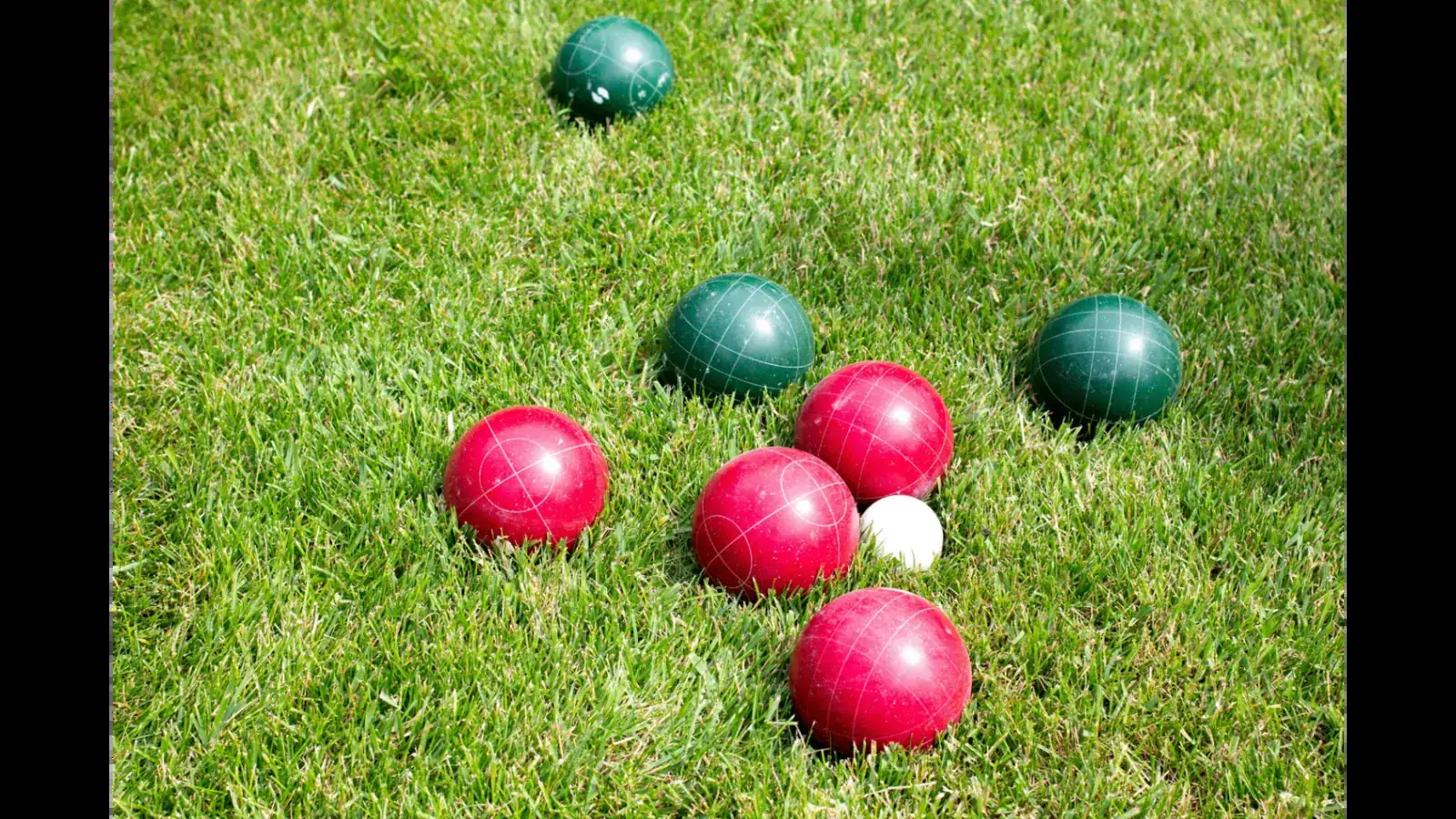
How to Start a Bocce League in Your Retirement Community
Quick answer: to start a bocce league in a retirement community, use doubles (2 players a side, 4 balls per team), play games to 12 or 15 points, schedule late-morning sessions on the same day each week, and run a round robin of 7 to 12 weeks with a playoff or celebration at the end. Six doubles teams on 2 courts play everyone once in 5 weeks.
Bocce is having a moment in retirement communities, and for good reason. It's social, strategic, low-impact, and accessible to almost everyone. A well-run bocce league becomes the highlight of the week for many residents, combining friendly competition with the kind of casual conversation that builds lasting friendships.
If your community has a bocce court (or even a flat stretch of grass), you have everything you need to start a league. This guide covers how to set one up, keep it running smoothly, and make it something residents look forward to all season.
Why Bocce Works So Well for Seniors
Bocce isn't just a fallback sport for people who can't play pickleball. It has genuine advantages that make it ideal for 55+ communities.
Minimal physical demand. No running, jumping, or quick lateral movement. Players walk, bend to roll, and stand. That's it. Residents with knee replacements, hip issues, or general mobility limitations can participate fully.
Strategic depth. Bocce looks simple (roll balls toward a target), but experienced players think several throws ahead. Where should I place this ball? Should I knock theirs away or get closer? The mental engagement keeps it interesting season after season.
Inherently social. Unlike sports where you're focused on a fast-moving ball, bocce has natural pauses. Between throws, players chat. Waiting for your turn becomes conversation time. The pace invites socializing in a way that faster sports don't.
All skill levels play together. A beginner can beat an experienced player on any given day. Luck and strategy balance out, so mixed-skill games stay competitive and fun.
Works outdoors or indoors. Traditional bocce is played outside on a court or lawn. But indoor bocce (carpet bowling, indoor courts) extends the season year-round in communities with weather limitations.
Basic Bocce Rules (Simplified for Rec Play)
If you've never played, here's the quick version. You can adjust these rules for your community.
Setup
- Two teams (usually 2 players each, but 1v1 or larger teams work)
- Each team gets 4 bocce balls (one color per team)
- One small target ball called the pallino (or jack)
How to Play
- Toss the pallino. One team throws the small target ball down the court. It must pass the center line and stay in bounds.
- First throw. The team that tossed the pallino rolls one bocce ball, trying to get close to the pallino.
- Alternating throws. The team that is NOT closest to the pallino throws next. This continues until one team is out of balls.
- Remaining throws. Once one team is out of balls, the other team rolls their remaining balls.
- Scoring. Only ONE team scores per round (called a "frame"). That team gets 1 point for each of their balls that is closer to the pallino than the opponent's closest ball.
- Winning. First team to reach a set number of points wins (commonly 12, 15, or 21 for recreational play).
Common Rec League Adjustments
| Standard Rule | Rec League Modification |
|---|---|
| Must throw underhand | Allow any throwing style |
| Balls must stay in bounds | Casual leagues may allow balls against the wall |
| No stepping over the foul line | Flexible for mobility issues |
| Games to 15 | Shorter games (to 11 or 12) fit schedules better |
The goal is fun, not strict rule enforcement. Adjust rules to fit your community's preferences and physical abilities.
Choosing a League Format
Doubles (2v2) - Most Popular
Two players per team. Partners alternate throws. This is the standard format and works best for most leagues because:
- Teams are small enough to fill easily
- Partners provide social connection
- Strategy involves teamwork
Singles (1v1)
One player per side, each throwing all 4 balls. Good for:
- Smaller communities
- Ladder-style competitive leagues
- Players who want more throws per game
Triples (3v3)
Three players per team sharing the team's 4 balls, so one player throws two each frame. Less common, but works for larger groups who want everyone involved.
Team Rotation (Mixer Format)
Partners rotate each week. Everyone plays with everyone over the season. Best for:
- Building community connections
- New residents meeting people
- Preventing dominant teams
Structuring Your Season
Season Length
| Format | Duration | Best For |
|---|---|---|
| 7 weeks plus a playoff week | Short commitment, good for a first season | Testing interest |
| 8 to 10 weeks | Standard season length | Established leagues |
| 12 weeks | Longer season | Communities with high demand |
Shorter seasons work well when starting out. You can always extend if residents want more.
Matches Per Week
Most retirement community bocce leagues play once per week. This keeps it manageable and gives residents something to look forward to without overwhelming the calendar.
Suggested: One weekday morning (Tuesday, Wednesday, or Thursday tends to work well).
Round Robin Schedule
In a round robin, every team plays every other team. This is the fairest format and ensures everyone gets equal games.
| Teams | Total Rounds Needed |
|---|---|
| 4 teams | 3 rounds (each team plays 3 games) |
| 6 teams | 5 rounds |
| 8 teams | 7 rounds |
| 10 teams | 9 rounds |
If you have 6 teams and want an 8-week season, you'll have rounds to spare for playoffs or makeup games.
Playoffs
Even casual leagues benefit from a playoff to close the season. Options:
- Top 4 teams → Semifinals + Finals
- Top 2 teams → Single championship game
- Everyone makes playoffs → Seeded bracket based on standings
The championship game gives residents something to watch and cheer for, even if their team didn't make it.
Scheduling Tips for Retirement Communities
Best Time Slots
Mid-morning (9-11 AM) works well for most communities:
- After breakfast
- Before lunch
- After early medical appointments
- Not too hot (for outdoor courts)
Late afternoon (3-5 PM) can work in cooler seasons:
- After rest time
- Before dinner
Avoid:
- Meal times
- Peak appointment hours (early morning)
- Hottest part of the day (outdoor courts)
Game Length
A typical bocce game to 12 points takes 20-40 minutes depending on pace. Schedule 45-60 minutes per match to allow for:
- Warmup throws
- Social time before/after
- Slower-paced play
Sample League Day
9:00 AM - Court 1: Team A vs Team B
9:00 AM - Court 2: Team C vs Team D
10:00 AM - Court 1: Team E vs Team F
10:00 AM - Court 2: Team A vs Team C
If you have two courts, you can run two matches simultaneously and move through the schedule efficiently.
Court Considerations
Outdoor Bocce Courts
Ideal: Dedicated bocce court (60-90 feet long, 10-13 feet wide) with packed surface (crushed oyster shell, decomposed granite, or synthetic turf).
Good enough: Any flat, relatively smooth outdoor surface-grass, packed dirt, patio area.
Challenges:
- Weather cancellations
- Seasonal limitations (too hot, too cold, too wet)
- Surface maintenance
Indoor Options
Many retirement communities offer indoor bocce or carpet bowling:
- Indoor bocce courts: Some communities have dedicated indoor spaces
- Carpet bowling: Similar concept, played on carpet with smaller balls
- Multi-purpose rooms: Temporary courts can be set up in large rooms
Indoor leagues solve weather problems and allow year-round play.
No Court? Get Creative
If your community doesn't have a bocce court:
- Flat lawn: Bocce can be played on grass (balls roll slower, but it works)
- Parking lot: Temporary court with cones or tape
- Request one: Many communities will build a court if residents show interest
Registration and Team Formation
How Many Players?
For a doubles league, you need a minimum of 8 players (4 teams). A comfortable size is 12-16 players (6-8 teams)-enough for variety but not so many that scheduling becomes difficult.
Registration Options
Paper sign-up: Post a sheet in the clubhouse. Simple, works for everyone.
Online registration: Use a form or league management software. Easier to manage but may exclude some residents.
Hybrid: Offer both. Enter paper sign-ups into the system manually.
Forming Teams
Option 1: Sign up as pairs - Residents register with their partner already chosen.
Option 2: Individual sign-up, random pairs - Everyone signs up alone, organizers pair them randomly or based on skill level.
Option 3: Draft - Captains (experienced players) draft from a pool of individuals.
For social leagues, random pairing works well and helps residents meet new people. For competitive leagues, letting players choose partners maintains team chemistry.
Keeping Score and Standings
During Games
Each game needs someone to keep score. Options:
- Players track their own game - Works if both teams agree on the count
- Scorekeeper - Volunteer or designated person tracks all games
- Scoreboard at the court - Flip scorer that players update each frame
League Standings
Track after each week:
- Wins and losses
- Points scored (tiebreaker)
- Head-to-head record (tiebreaker)
Post standings weekly in the clubhouse and/or send via email. Residents love checking where they stand.
Standings Example
| Rank | Team | W | L | Points For |
|---|---|---|---|---|
| 1 | Frank & Mary | 5 | 1 | 72 |
| 2 | Joe & Linda | 4 | 2 | 68 |
| 3 | Bob & Carol | 4 | 2 | 61 |
| 4 | Tom & Sue | 3 | 3 | 55 |
Managing Different Skill Levels
Bocce is forgiving: a beginner can beat an experienced player. But if your community has serious players alongside casual ones, consider:
Skill Divisions
Division A: Competitive, experienced players
Division B: Social, casual players
This requires enough participants to fill two divisions (minimum 8 teams total).
Handicap System
Give weaker teams a point advantage. Example:
- Top-ranked team starts at 0
- Middle-ranked teams start at 2 points
- Lower-ranked teams start at 4 points
Handicaps keep games competitive when skill gaps exist.
Social vs. Competitive Leagues
Run two separate leagues:
- Monday: Social Bocce - Relaxed rules, emphasis on fun
- Wednesday: Competitive Bocce - Stricter rules, standings matter
Residents self-select into the league that fits their style.
Communication That Works
Retirement community residents have varying relationships with technology. Cover multiple channels:
Physical postings:
- Weekly schedule on the clubhouse bulletin board
- Schedule posted at the bocce court
- Standings posted weekly
Digital communication:
- Email updates to those who want them
- Community app/portal if available
Verbal reminders:
- Announcement at community events
- Phone calls for rain cancellations
The most important thing: Be consistent. If you always post the schedule on the bulletin board by Friday, residents will know to look there.
Weather and Cancellations
Outdoor bocce needs a weather policy.
Decision Making
Designate ONE person to make cancellation calls. Conflicting information causes confusion.
Timing
Decide by 7-8 AM for morning leagues. This gives residents time to adjust their day.
Communication
- Email/text to those who opted in
- Sign posted at the clubhouse
- Sign posted at the court (in case someone didn't get the message)
Makeup Games
Options:
- Skip it: Just don't play that week (simplest)
- Reschedule: Play the makeup game later in the season
- Double-header: Play two matches in one session
For casual leagues, skipping is often fine. For competitive leagues where standings matter, rescheduling makes sense.
End-of-Season Celebration
Don't let the season fade away. Mark the ending:
Playoff finals - Even if it's just the top two teams playing a championship game, make it an event. Invite other residents to watch.
Awards - Trophies, medals, or certificates for:
- League champions
- Best sportsmanship
- Most improved
- Participation (everyone gets something)
Social gathering - Pizza party, potluck, or drinks at the clubhouse after the final games.
Recognition - Thank volunteers, coordinators, and anyone who helped make the season happen.
These rituals build anticipation for next season and reinforce that the league matters.
Common Questions
How long does a bocce game take?
Games to 12 points typically take 20-40 minutes. Allow 45-60 minutes per match to be safe.
Can players with mobility aids participate?
Yes. Players can use walkers, sit between throws, or have someone retrieve balls for them. Bocce is highly adaptable.
What if it's too hot/cold outside?
Consider indoor bocce or carpet bowling. Or shift outdoor game times to cooler parts of the day.
What if we don't have enough players for full teams?
Run a singles league (1v1) or have teams of 3 where one person sits out each frame. Adapt to your numbers.
Should we charge a fee?
Optional. Many community leagues are free. Some charge a fee to cover awards, balls or court maintenance; the free league fee calculator works out the amount from your costs.
Ready to Roll?
Bocce brings residents together in a way few other activities can. The pace allows conversation. The competition adds excitement. The simplicity means everyone can play.
Start with one season, keep it simple, and watch participation grow. Before long, your bocce league will be one of the most anticipated activities on the community calendar.
SportsGrove handles the scheduling, standings, and communication so you can focus on what matters: building community one throw at a time. See SportsGrove for bocce and for 55+ communities.
Free template: bocce league rules, ready to fill in with your community's details and print for the clubhouse board.
Frequently asked questions
How do you start a bocce league in a retirement community?
Use doubles (2 players a side), play games to 12 or 15, pick one late-morning slot each week, and run a round robin of 7 to 12 weeks with a playoff or celebration at the end. Take sign-ups online and on paper.
How many points is a bocce game?
Recreational leagues commonly play to 12, 15 or 21. A game to 12 usually takes 20 to 40 minutes, so schedule 45 to 60 minutes per match.
How many balls does each bocce team use?
Four, in one color. In doubles each player throws two; in singles one player throws all four; in triples the three players share the four.
How long is a bocce league season?
7 to 12 weeks. A round robin of 6 teams takes 5 weeks, so a 7-week season leaves room for a make-up week and playoffs.
Can you play bocce without a court?
Yes. A flat stretch of lawn, a gravel path or an indoor carpet works for recreational play. Mark the boundaries and the foul lines with string or tape.
Ready to start your league?
SportsGrove handles registration, scheduling, payments and messages, so you can focus on running great game nights.
No credit card required · 30-day free trial